
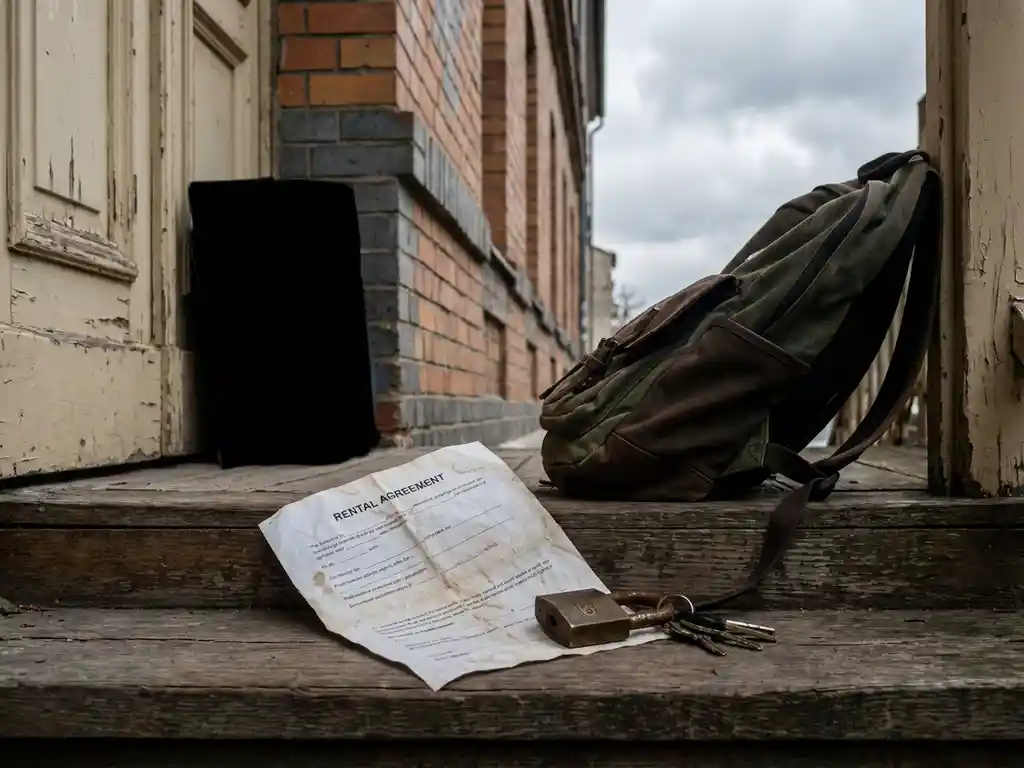
The biggest mistakes students make when renting in Berlin are falling for housing scams, submitting incomplete applications, skipping the Anmeldung registration, and signing contracts without understanding the terms. These errors are especially common among international students who are unfamiliar with Germany’s rental market, which is highly competitive and heavily document-driven. The sections below address the most common pitfalls in detail so you can avoid them before they cost you time, money, or a place to live.
How do Berlin housing scams target international students?
Berlin housing scams typically target international students by advertising apartments at below-market prices on platforms like Facebook Marketplace, Craigslist, or unverified listing sites. The scammer poses as a landlord, often claiming to be abroad, and asks for a deposit or first month’s rent before the student has ever viewed the property. Once the money is sent, the listing disappears.
International students are disproportionately targeted because they are searching remotely from another country, under time pressure, and unfamiliar with what a realistic Berlin rental looks like. A one-bedroom apartment in Mitte or Prenzlauer Berg for €600 per month should raise immediate red flags in 2026, when average rents in central districts sit considerably higher.
Common warning signs of a Berlin housing scam include:
- Requests for payment via wire transfer, Western Union, or cryptocurrency before a viewing
- Landlords who claim to be overseas and cannot meet in person
- Listings with unusually low rent for the location and size
- Pressure to decide quickly with phrases like “many applicants are waiting”
- No verifiable address or property registration information
The safest rule is simple: never transfer money for a Berlin apartment you have not physically visited or verified through a trusted intermediary. Always use platforms that verify listings before publishing them, and treat any request for upfront payment without a signed contract as a scam until proven otherwise.
Why do students lose apartments to stronger applicants in Berlin?
Students lose apartments in Berlin because landlords receive multiple applications simultaneously and select based on financial reliability and documentation completeness. A student with a guarantor letter, full document set, and a personalised cover letter will almost always be chosen over an applicant who submits an incomplete profile, even if the latter applied first.
Berlin’s rental market remains one of the most competitive in Germany. For desirable apartments, landlords can receive dozens of applications within hours. In this environment, presentation and preparation are the deciding factors.
What landlords actually look for
German landlords prioritise proof of income or financial backing, a clean Schufa credit report, and a complete application dossier. For students who do not yet have German income, a guarantor letter from a parent or sponsor, combined with bank statements showing sufficient funds, can substitute effectively. Landlords also look for a polite, professional tone in any written communication.
How to make your application stand out
Prepare a rental dossier in advance that includes your passport, university enrolment certificate, proof of funds or scholarship letter, a guarantor declaration if applicable, and a brief personal introduction letter written in German or English. Submitting everything in one organised PDF signals reliability and seriousness. Speed also matters: a well-prepared application submitted within the first hour of a listing going live outperforms a perfect application sent a day later.
What documents do you need to rent an apartment in Berlin?
To rent an apartment in Berlin, you typically need a valid passport or ID, a university enrolment certificate, proof of income or financial means such as bank statements or a scholarship letter, a Schufa credit report, and a completed rental application form. If you cannot show personal income, a guarantor letter from a creditworthy person is usually required.
For international students arriving from outside the EU, landlords may also request a copy of your visa or residence permit. Some landlords ask for the last two or three months of bank statements to confirm you have sufficient funds to cover rent. Preparing a student housing application package with all of these documents before you begin searching will save significant time and improve your chances considerably.
Here is a standard document checklist for renting in Berlin as a student:
- Valid passport or national ID card
- University admission letter or enrolment certificate
- Bank statements from the last two to three months
- Scholarship letter or proof of financial support
- Schufa self-disclosure (Schufa-Auskunft)
- Guarantor letter (Bürgschaftserklärung) if required
- Completed rental application form (Mieterselbstauskunft)
- Visa or residence permit (for non-EU nationals)
What is Anmeldung and what happens if you skip it?
Anmeldung is the mandatory process of registering your residential address with the local citizens’ office (Bürgeramt) in Germany. Every person living in Germany, including international students, must complete this registration within two weeks of moving into a new apartment. Skipping it is not a minor oversight; it creates serious legal and practical problems.
Without Anmeldung, you cannot open a German bank account, receive your tax identification number, register at many universities, access public health insurance, or obtain a residence permit extension. In practice, almost every official process in Germany requires your Anmeldebestätigung, the confirmation document you receive after registering.
Completing Anmeldung requires an appointment at a Bürgeramt, your passport, and a landlord confirmation form called a Wohnungsgeberbestätigung. This form must be signed by your landlord and confirms that you are living at the address. Some landlords in informal or sublet arrangements are reluctant to provide this, which is itself a warning sign worth addressing before signing any lease.
If you delay registration beyond the legal window, you may face fines, though enforcement varies. The practical consequences of not having your registration certificate tend to be more immediately damaging than any official penalty.
How can students avoid signing a bad rental contract in Berlin?
Students can avoid signing a bad rental contract in Berlin by reading the full agreement carefully before signing, checking for unusual clauses around notice periods, subletting rights, and renovation obligations, and never signing under time pressure. If the contract is in German and you are not fluent, have it translated or reviewed before committing.
Several contract terms are particularly important for students to understand:
- Notice period (Kündigungsfrist): Standard German tenancy law requires three months’ notice for tenants. Contracts that demand longer notice periods from the tenant only are worth questioning.
- Deposit (Kaution): The legal maximum is three months’ cold rent (Kaltmiete). Any request for more than this is illegal.
- Renovation clauses (Schönheitsreparaturen): Many contracts include clauses requiring tenants to repaint or restore the apartment. German courts have ruled many of these clauses invalid, but they still appear regularly.
- Fixed-term contracts (Zeitmietvertrag): These limit your ability to leave early. Make sure the end date aligns with your study programme.
- Additional costs (Nebenkosten): Understand what is included in the warm rent versus what you pay separately.
Never sign a contract the same day you receive it if you feel rushed. A legitimate landlord will give you reasonable time to review the document. If a landlord insists on an immediate signature as a condition of getting the apartment, treat that pressure as a red flag.
Should students use a housing agency or search independently in Berlin?
Students searching for a Berlin apartment should use a housing agency when they are arriving from abroad, have limited time, or are unfamiliar with German rental norms. Searching independently is viable if you are already in Berlin, speak some German, and have the time to visit multiple apartments and manage all documentation yourself.
Independent searching through platforms like WG-Gesucht, ImmobilienScout24, or university housing boards can be effective, but it requires persistence, fast response times, and a complete application ready to submit immediately. The volume of competition means that delayed or incomplete applications rarely succeed.
A reputable housing agency that specialises in student accommodation offers several advantages:
- Access to verified listings not always available on public platforms
- Guidance through the application and document process
- Support with contract review and understanding German rental law
- Help with post-move-in steps like Anmeldung and utility setup
The key question is whether the agency charges the tenant a fee. Under German law (the Bestellerprinzip), the party who commissions a broker pays the fee. For most residential rentals, this means the landlord pays, not the tenant. Be cautious of any agency that charges students upfront fees simply for access to listings, as this may not be legally justified. You can explore student support services to understand what legitimate agency support looks like before committing to any provider.
How PropTech 24×7 GmbH helps students avoid rental mistakes in Berlin
PropTech 24×7 GmbH was built specifically to address the challenges described throughout this article. Founded by someone who navigated Berlin’s housing market as an international student, the company provides end-to-end support that covers every stage of the rental process, from finding a verified apartment to completing your Anmeldung registration.
Here is what the service includes for students renting in Berlin:
- Verified listings only: Every property is checked before it reaches students, eliminating the risk of housing scams entirely
- Application support: Help preparing your full rental dossier so your application is competitive from day one
- Contract review: Guidance on understanding your lease terms, including clauses around deposits, notice periods, and renovation obligations
- Anmeldung and bureaucracy support: Step-by-step assistance with address registration, utility setup, and WiFi connection
- 24 to 48 hour response guarantee: Fast turnaround so you do not lose apartments while waiting for answers
- Student-friendly pricing: Options starting from €400 per month with flexible contract terms designed for study timelines
Whether you are arriving from India, Nigeria, Egypt, or anywhere else in the world, PropTech 24×7 GmbH removes the guesswork from student housing in Berlin. If you are ready to find a safe, affordable apartment without the typical risks and delays, get in touch with the team today and take the first step toward a secure move-in.