
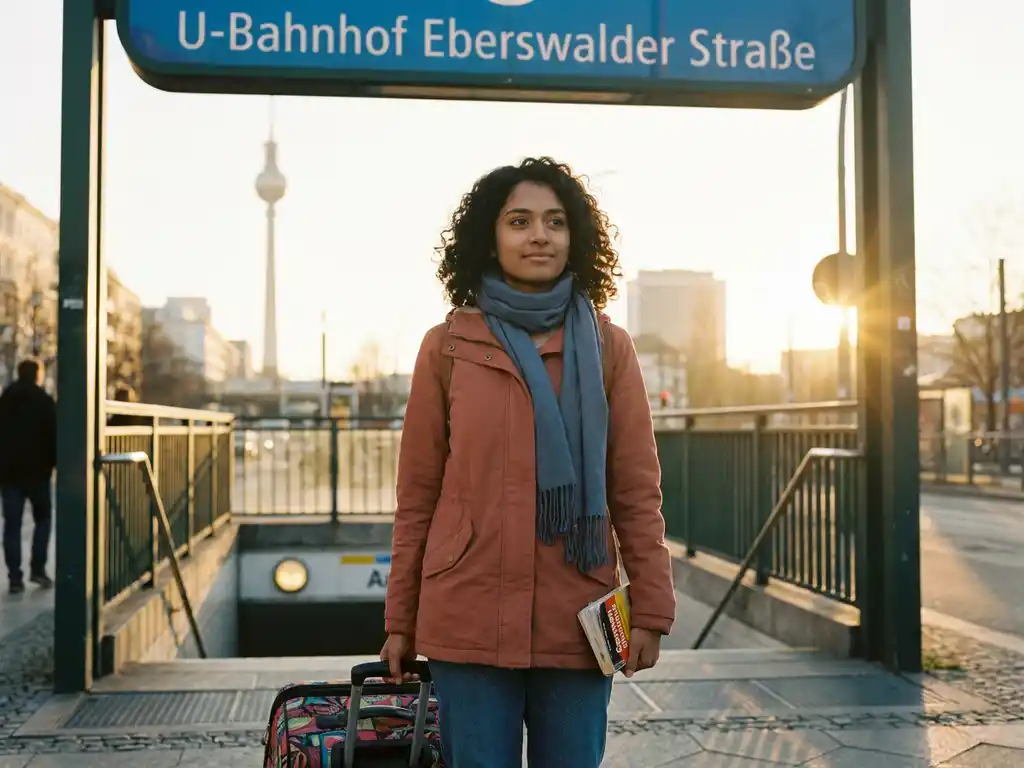
Yes, you can move to Germany without speaking German. Many thousands of international students and expats do exactly this every year, particularly in larger cities like Berlin, Munich, and Hamburg, where English is widely spoken and entire communities exist to support newcomers. That said, the degree to which you can thrive without German depends heavily on where you live, what you study or do for work, and how long you plan to stay.
The honest answer is that English gets you surprisingly far in Germany, but it does not get you everywhere. Understanding where the language gap matters and where it does not will help you prepare realistically for life as an English speaker in Germany. The questions below unpack exactly that.
How well do Germans speak English in daily life?
Germans speak English at a high level by global standards. Germany consistently ranks among the top non-native English-speaking countries in the world, and in major cities like Berlin, you can navigate daily life, including grocery shopping, public transport, and socialising, almost entirely in English. Younger generations in particular are often fluent or near-fluent.
In practice, this means that as an English-speaking expat or international student, you are unlikely to struggle in everyday urban settings. Cafes, coworking spaces, universities, and international neighbourhoods like Prenzlauer Berg or Mitte in Berlin operate comfortably in English. Service staff in cities regularly switch to English without hesitation.
However, the picture changes outside major metropolitan areas. In smaller towns, rural regions, and among older generations, English proficiency drops noticeably. If you are moving to a smaller German city for a university programme or work placement, you should expect more situations where German is the only option available.
What parts of German life require the German language?
Several important areas of daily life in Germany still operate primarily in German, regardless of how international the city is. Bureaucracy is the most significant barrier. Government offices, registration processes, insurance paperwork, and official correspondence are almost always conducted in German, and navigating these systems without language support can be genuinely difficult.
The areas where German is most essential include:
- Official registration (Anmeldung): Registering your address at the local Bürgeramt is mandatory, and forms are typically in German
- Health insurance and banking: Documentation, contracts, and correspondence are usually in German
- Rental agreements: Most standard lease contracts are written in German, even for international tenants
- Local government services: Visa extensions, residence permits, and tax filings require German or a qualified translator
- Supermarkets and local shops outside cities: Staff may not speak English, especially in smaller towns
This is why many international students benefit from support services that handle bureaucratic steps on their behalf, particularly in the first weeks after arrival when the paperwork volume is highest.
Can international students study in Germany in English?
Yes, international students can absolutely study in Germany in English. The number of English-taught degree programmes in Germany has grown substantially, and in 2026 there are hundreds of bachelor’s and master’s programmes taught entirely in English at both public universities and private institutions. Fields like engineering, business, computer science, and international relations are particularly well represented.
Universities such as the Technical University of Berlin, the Free University of Berlin, and many others actively recruit international students and structure their English-taught programmes to accommodate non-German speakers. Campus life, student services, and academic support are typically available in English at these institutions.
That said, studying in Germany in English does not mean you will never need German. Even on English-taught programmes, some administrative processes, local internships, and everyday campus interactions may require basic German. Students who invest even a small amount of time in learning practical German phrases find the overall experience significantly smoother.
How do English-speaking expats find housing in Germany?
English-speaking expats find housing in Germany through a combination of international listing platforms, university accommodation offices, and specialist student housing services. The German rental market is competitive, particularly in Berlin, and many landlords communicate exclusively in German, which creates a real barrier for newcomers who are searching remotely or without language support.
The main routes English-speaking newcomers use include:
- University housing offices: Many universities maintain dormitory lists and partner accommodation for international students
- International listing platforms: Sites that cater specifically to English-speaking international tenants
- Facebook groups and expat communities: Berlin in particular has active English-language housing communities, though scam risk is high in informal channels
- Specialist student housing services: Companies that verify listings, communicate with landlords, and handle paperwork on behalf of international students
One important warning: Germany’s housing market, especially in Berlin, has a well-documented scam problem targeting international students who are searching from abroad. Listings that ask for deposits before a viewing, offer unusually low rents, or request payment via informal transfer methods are common red flags. Working with a verified housing service significantly reduces this risk.
What German should you learn before moving?
Before moving to Germany without speaking German, you should aim to learn a core set of practical phrases and vocabulary that cover everyday survival situations. You do not need to be fluent, but knowing around 200 to 300 words and basic sentence structures will make your first weeks far less stressful and will earn you genuine goodwill from locals.
The most useful areas to focus on before arrival include:
- Greetings and politeness: Germans value formality, and a simple “Guten Morgen” or “Danke schön” goes a long way
- Numbers and money: Essential for shopping, transport, and reading bills
- Registration vocabulary: Key terms related to Anmeldung, landlord communication, and housing contracts
- Transport and directions: Reading signs, understanding announcements, and asking for help
- Emergency phrases: Knowing how to ask for help or describe a problem in basic German
Apps like Duolingo, Babbel, and Pimsleur are well suited to building this foundation before you arrive. Once in Germany, many cities offer free or subsidised German language courses specifically for newcomers and international students, which are worth enrolling in early.
Does not speaking German affect long-term career prospects in Germany?
Not speaking German does affect long-term career prospects in Germany, though the degree depends significantly on your industry and the type of employer you target. In international tech companies, startups, and multinational corporations, English is often the working language, and German is not a formal requirement. In these environments, skilled professionals can build long careers without becoming fluent in German.
However, in most other sectors, German language skills become increasingly important the longer you stay and the more senior you become. Client-facing roles, public sector jobs, healthcare, law, and education almost always require professional-level German. Even in international companies, internal promotions and leadership roles often go to candidates who can communicate across the full organisation, including German-speaking colleagues and clients.
The practical reality is that most expats who build sustainable careers in Germany eventually reach a point where learning German is no longer optional. Starting early, even at a basic level, puts you in a much stronger position when that moment arrives. Germany offers a range of integration courses and language programmes that are specifically designed to support working adults and international students who are building their professional lives in the country.
How PropTech 24×7 GmbH helps international students settle in Germany
For international students arriving in Germany without German language skills, the first weeks are often the hardest. Finding verified housing, completing official registration, setting up utilities, and navigating landlord contracts in a foreign language can feel overwhelming. PropTech 24×7 GmbH was built specifically to remove those barriers.
Here is what the company provides for English-speaking students moving to Germany:
- Verified housing listings only: Every listing is checked to protect students from Germany’s well-documented rental scams
- Bureaucracy support included: Anmeldung assistance, utility setup, and WiFi connection are handled as part of the service
- 24 to 48-hour response guarantee: Fast support when questions arise, regardless of time zone or arrival date
- Affordable entry points from €400 per month: Flexible, student-friendly contracts with no hidden fees
- End-to-end lifecycle support: From finding your first apartment to accessing career opportunities, all in one place
Whether you are searching for housing before you arrive or need support after landing, PropTech 24×7 GmbH offers a guided, human-centred approach that takes the language barrier out of the equation. Get in touch with the team to find out how they can help you move to Germany with confidence.