
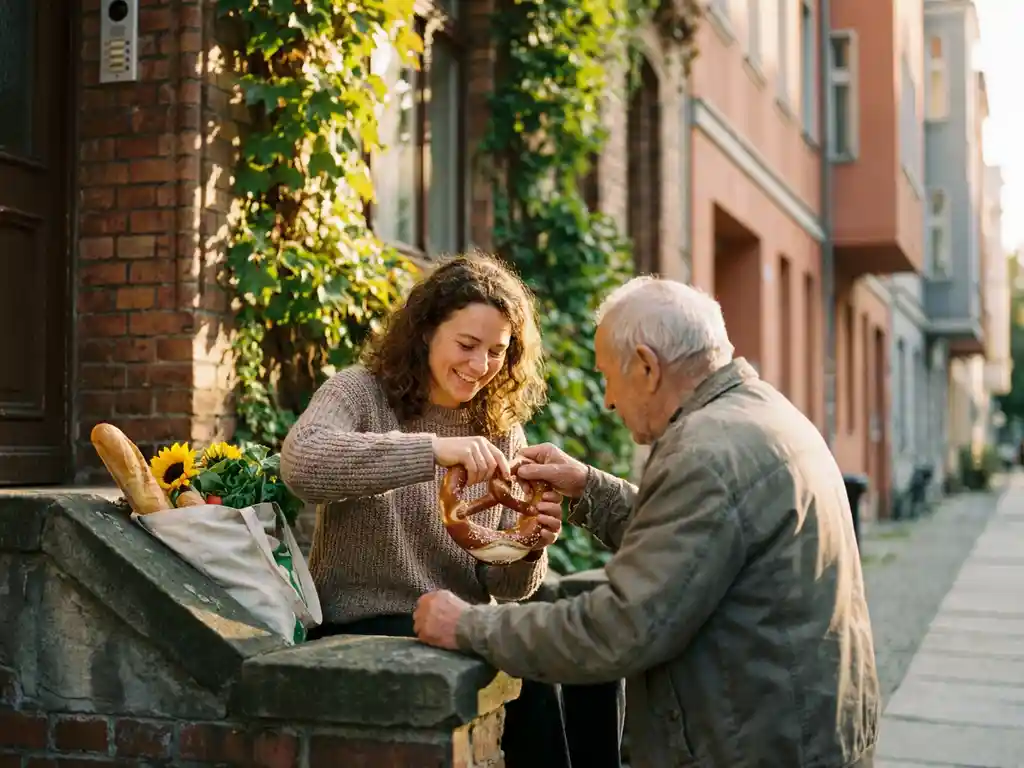
Integrating into German culture as a newcomer means actively learning the language, respecting local social norms, building genuine connections, and navigating bureaucratic systems early. Cultural integration in Germany is rarely instant, but it becomes significantly easier once you understand the unwritten rules that shape everyday life here. The questions below address the most common challenges international students and newcomers face when adapting to life in Germany.
What are the biggest cultural differences newcomers notice in Germany?
The biggest cultural differences newcomers notice in Germany are a strong emphasis on punctuality, direct communication, a clear separation between public and private life, and a deep respect for rules and structure. These contrasts can feel stark for people arriving from cultures where social interactions are more fluid or hierarchical in different ways.
Germans tend to mean exactly what they say. Directness is not considered rude but rather a sign of respect and honesty. If a German colleague tells you your work needs improvement, they are not being harsh, they are being helpful by their cultural standard. This can initially feel blunt to newcomers from countries where indirect communication is the norm.
Punctuality carries real social weight. Arriving even ten minutes late to a meeting, a dinner invitation, or a university seminar without prior notice is considered disrespectful. In contrast, many newcomers are surprised to find that Germans are equally strict about not overstaying their welcome, arriving on time and leaving on time are both expected.
Sundays in Germany are also notably quiet. Most shops are closed, noise is kept to a minimum, and the day is culturally protected as a rest day. For newcomers used to busy weekend commercial life, this can feel isolating at first but quickly becomes a rhythm many come to appreciate.
How does the German language barrier affect social integration?
The German language barrier significantly affects social integration because most everyday life, from administrative processes to casual neighbourhood interactions, happens in German. While English is widely spoken in Berlin and other major cities, relying solely on it limits your ability to form deeper connections and navigate daily life independently.
University environments and international student communities offer an English-speaking bubble that is comfortable but can slow down broader cultural integration. Germans who speak excellent English will often switch to it out of politeness, which inadvertently reduces the opportunities newcomers have to practise German in real conversations.
Even basic German proficiency changes the experience dramatically. Greeting a landlord, understanding a letter from the Finanzamt, or chatting with a neighbour in their language signals effort and respect. Language apps, community language exchanges, and university language courses are all practical starting points. Many cities also offer subsidised integration courses (Integrationskurse) that combine language learning with cultural orientation.
What social customs should newcomers follow in Germany?
Newcomers living in Germany should follow social customs around punctuality, noise etiquette, greeting formality, and respecting shared spaces. These are not optional social niceties, in Germany, they carry real weight in how you are perceived by neighbours, colleagues, and institutions.
- Greetings: Use formal address (Sie, Herr, Frau) with people you have just met, especially in professional or official settings. Switching to informal address (du) should happen only when the other person initiates it.
- Noise rules: Quiet hours (Ruhezeiten) typically apply from 10pm to 7am on weekdays, and often all day on Sundays. Loud music, drilling, or noisy gatherings during these times can lead to neighbour complaints and even formal warnings.
- Recycling: Germany has one of the most detailed recycling systems in the world. Sorting waste correctly into the right bins (Gelber Sack, Altpapier, Restmüll, Biotonne) is a social expectation, not just a legal one.
- Queuing: Germans queue seriously. Jumping a queue or crowding a cashier is considered genuinely rude.
- Splitting bills: Paying separately (getrennt) at restaurants is completely normal and often the default. Do not assume the group will split evenly unless agreed upon.
These customs are not difficult to adopt once you are aware of them. Most Germans are understanding of genuine mistakes from newcomers who are clearly making an effort to adapt.
How can international students build a social network in Germany?
International students can build a social network in Germany by joining university clubs and student organisations, attending language exchange events, participating in local community activities, and making a deliberate effort to connect with both international and German peers. Passive socialising rarely works in Germany, friendships here tend to develop slowly but become deeply loyal over time.
German universities (Hochschulen) typically have student unions (AStA or StuRa) that organise events, interest groups, and social activities. These are excellent entry points because they bring together both German and international students around shared interests rather than shared nationality.
Tandem language partnerships are particularly effective. You meet regularly with a native German speaker who wants to practise your language, and in return you practise German. These partnerships often develop into genuine friendships because they require consistent, one-on-one engagement.
Volunteering is another underused path. Germany has a strong culture of civic volunteering (Ehrenamt), and joining a local initiative, whether it is a community garden, a sports club, or a refugee support organisation, places you in recurring contact with locals who share your values. For international student support and community connections, structured settlement services can also help bridge the gap between arrival and belonging.
What German bureaucracy should newcomers understand first?
The first piece of German bureaucracy every newcomer must understand is the Anmeldung, the mandatory registration of your address at the local Bürgeramt (citizens’ office). Without completing your Anmeldung, you cannot open a bank account, receive a tax ID, register for university, or sign most contracts. It must be done within two weeks of moving into your accommodation.
Beyond the Anmeldung, newcomers should be aware of the following early-stage requirements:
- Blocked account (Sperrkonto): Required for most student visa applications to prove financial means. Understanding how to access and use these funds matters from day one.
- Health insurance: Mandatory in Germany. Students must either enrol in the public statutory system (gesetzliche Krankenversicherung) or hold approved private coverage before registering at university.
- Tax ID (Steueridentifikationsnummer): Automatically issued after Anmeldung and required for employment, even for part-time student jobs.
- Residence permit (Aufenthaltstitel): Non-EU students must apply for this at the Ausländerbehörde, typically within 90 days of arrival. Book appointments early, waiting times in Berlin can stretch for weeks.
Understanding this sequence before you arrive, rather than discovering it after, saves enormous stress. Many newcomers find that bureaucratic delays stem not from the system being impossible but from not knowing which step comes first.
How long does it take to feel at home in Germany?
Most newcomers begin to feel genuinely at home in Germany after one to two years, though the timeline varies significantly depending on language progress, social connections, and how proactively someone engages with local life. The first few months are typically the hardest, marked by administrative overwhelm and social unfamiliarity.
Cultural integration in Germany tends to follow a recognisable pattern. The initial weeks are busy with practical tasks, finding housing, completing registration, setting up banking. Once those foundations are in place, the emotional work of belonging begins. This phase is often where newcomers feel most isolated, particularly if they are living alone or relying entirely on a single social group.
Language is consistently the most cited factor in how quickly people feel settled. Newcomers who invest in German language learning within the first six months report feeling more confident and more connected to their surroundings. Those who remain in English-only environments for extended periods often describe a sense of being adjacent to German life rather than part of it.
It is also worth accepting that feeling at home is not a single moment but a gradual accumulation of small familiarity, knowing your local bakery’s schedule, understanding a joke in German, having a friend to call when something goes wrong. Settling into Berlin takes time, and that is entirely normal.
How PropTech 24×7 GmbH helps newcomers integrate into German culture
PropTech 24×7 GmbH was founded by someone who navigated Germany’s housing and integration challenges firsthand as a newcomer, and that lived experience shapes everything the company offers. Beyond finding verified, affordable accommodation across Berlin, PropTech 24×7 GmbH provides the practical and administrative support that makes cultural integration genuinely possible from day one.
- Anmeldung and bureaucracy support: Guidance through address registration, utility setup, and WiFi connection so newcomers are not left navigating German administration alone.
- Verified listings only: Every property is checked to protect students from the housing scams that are unfortunately common in Berlin’s rental market.
- 24 to 48 hour response guarantee: Fast, human support when questions arise, whether about the apartment, the neighbourhood, or what to do next.
- Student-friendly contracts: Flexible terms and affordable entry points starting at €400 per month, designed for the realities of student life.
- End-to-end lifecycle support: From securing housing to career guidance, the company supports students well beyond move-in day.
If you are preparing to relocate to Berlin and want a trusted partner to handle housing and integration logistics, get in touch with the team and take the first step toward feeling at home in Germany.