
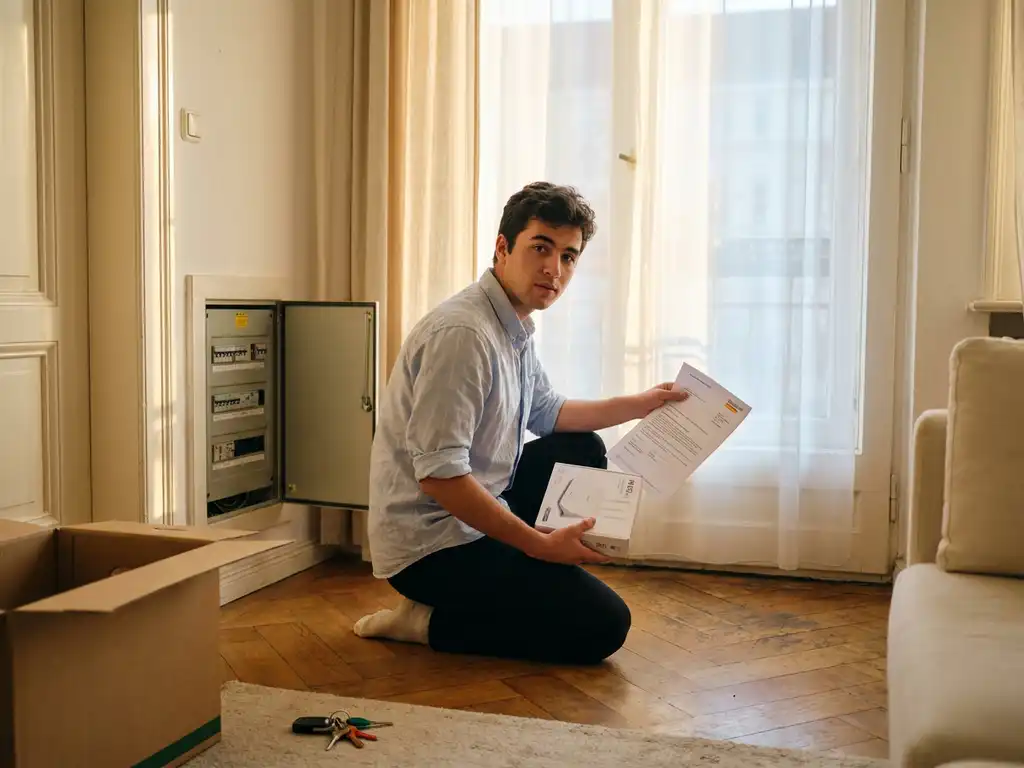
To set up utilities and WiFi after moving into a Berlin apartment, you need to register for electricity, check whether gas applies to your unit, and sign up with an internet provider. Most utility registrations can be completed online or by phone, and the process typically takes one to three weeks from start to finish. The sections below walk through each step in detail, from which utilities to prioritize to the documents you will need as an international student.
What utilities do you need to set up when moving into a Berlin apartment?
When moving into a Berlin apartment, the utilities you typically need to set up are electricity, gas (if your building uses it), and internet. Water and heating are almost always included in the Nebenkosten (ancillary costs) that your landlord bills alongside rent, so you usually do not need to arrange those independently.
Here is a quick overview of what falls under your responsibility versus your landlord’s:
- Your responsibility: Electricity, internet, and in some cases gas for a standalone stove or boiler
- Usually covered by Nebenkosten: Water, central heating, building maintenance, and waste disposal
- Optional but useful: Contents insurance (Hausratversicherung), which protects your belongings
Before you sign any utility contracts, check your rental agreement carefully. Some furnished apartments or student dormitories bundle electricity and internet into the monthly rent, which means you only need to activate the service rather than open a new account. If your apartment is unfurnished and newly rented, electricity registration is your first priority because the supply may be inactive when you arrive.
How do you register for electricity in a Berlin apartment?
To register for electricity in a Berlin apartment, you contact an electricity provider directly, provide your address and meter number, and choose a tariff. Berlin’s electricity grid is managed by Stromnetz Berlin, but you are free to choose any licensed supplier. The registration is done online in most cases and takes about ten to fifteen minutes.
Follow these steps to get electricity set up:
- Find your electricity meter number (Zählernummer): This is printed on the meter, usually located in the basement or hallway of the building.
- Note the current meter reading: This documents your consumption start point and protects you from being billed for a previous tenant’s usage.
- Choose a provider: Popular options in Berlin include Vattenfall, E.ON, Yello Strom, and Tibber. Comparison tools like Verivox or Check24 let you compare tariffs side by side.
- Register online: Most providers have fully digital sign-up flows. You will need your address, meter number, and bank details for direct debit.
- Confirm with your landlord: Notify your landlord that you have registered, as some buildings have a default provider that automatically supplies the apartment until you switch.
As an international student, look for providers that offer contracts without a minimum duration or with a short notice period. Avoid signing long-term contracts if you are unsure how long you will stay in the apartment.
Do you need to set up gas separately from electricity in Berlin?
Whether you need to set up gas separately in Berlin depends on your apartment. If your building uses gas for central heating or hot water, it is almost always managed by the landlord and included in your Nebenkosten. You only need to register for gas independently if your apartment has a gas stove or a standalone gas boiler that you operate yourself.
To check whether gas applies to your unit, look for a gas meter in the apartment or ask your landlord directly. If a gas meter is present and assigned to your unit, you follow a similar registration process to electricity: find the meter number, choose a supplier such as Vattenfall Wärme or E.ON, and register online.
Many Berlin apartments, particularly newer builds and student-oriented housing, use electric stoves and electric heating, which means gas is not a factor at all. When in doubt, your rental contract or the building’s Hausordnung (house rules) will clarify which utilities are your responsibility.
Which internet providers offer the best deals for students in Berlin?
For students in Berlin, the internet providers that consistently offer competitive deals are Deutsche Telekom, Vodafone, O2, and 1&1. Each offers DSL or cable broadband packages, and some include a router at no extra cost. For maximum flexibility, look for contracts with a one-month cancellation notice rather than a standard 24-month commitment.
Here is a practical breakdown by priority:
- Deutsche Telekom: Widest fiber coverage across Berlin, reliable speeds, but often priced slightly higher than competitors
- Vodafone: Strong cable network in many Berlin districts, frequently runs student promotions
- O2: Competitive pricing with flexible contract terms, a good option for shorter stays
- 1&1: Budget-friendly DSL packages, suitable for single-room apartments
- Waipu.tv or Unitymedia (now Vodafone): Cable-based options in buildings already wired for cable internet
Before choosing, check which infrastructure is available in your building. Not all addresses support fiber or cable, and your options may be limited to DSL. Use the provider’s address checker on their website to confirm availability before committing. If you are staying in a student housing service that includes WiFi, verify the included speed before paying for a separate contract.
What documents do you need to set up utilities in Germany as an international student?
To set up utilities in Germany as an international student, you need your passport or national ID, your German address (confirmed by your rental contract), your bank account details for SEPA direct debit, and in most cases your Anmeldung confirmation. The Anmeldung is the official address registration document you receive after registering at your local Bürgeramt.
Here is the full document checklist:
- Passport or EU ID card: Required for identity verification
- Rental contract (Mietvertrag): Confirms your legal right to occupy the address
- Anmeldung confirmation: Not always mandatory at sign-up, but many providers ask for it to verify the address
- German bank account (IBAN): Most utility providers only accept SEPA direct debit, so a German or EU bank account is essential
- Meter number: For electricity and gas registrations specifically
If you have not yet completed your Anmeldung, prioritize that step as soon as you move in. Without it, some providers may delay activating your account. The registration process in Berlin requires an appointment at a Bürgeramt, and slots can book up several weeks in advance, so act quickly after arrival.
How long does it take to get WiFi set up in a Berlin apartment?
Getting WiFi set up in a Berlin apartment typically takes between one and three weeks from the date you sign the contract. The exact timeline depends on whether your building already has the necessary infrastructure in place. If a technician visit is required to install a new connection, the wait can extend to three or four weeks, especially during high-demand periods like the start of a semester.
Here is what influences the timeline:
- Existing infrastructure: If the building is already connected to a cable or fiber network, activation is faster and may not require a technician
- Provider workload: Technician slots are limited, and September and October are particularly busy as the academic year begins
- Contract type: Some providers offer a “plug and play” router that arrives by post within a few days and works without installation
To avoid being without internet for weeks, order your connection as soon as you have a confirmed move-in date. In the meantime, a prepaid SIM card with a data plan from providers like Aldi Talk, Lidl Connect, or Congstar gives you mobile internet at low cost while you wait for your fixed line to go live.
How PropTech 24×7 GmbH helps with utility and WiFi setup in Berlin
PropTech 24×7 GmbH handles the practical complexity of settling into a Berlin apartment so that students can focus on their studies rather than bureaucracy. As part of its end-to-end student support model, the company provides concrete help with the exact steps covered in this article:
- Anmeldung support: Guidance through the official address registration process, including document preparation and appointment booking
- Utility registration assistance: Help identifying the right electricity and gas providers for your building and completing the sign-up process
- WiFi setup coordination: Advice on the best internet providers for your district and contract type, tailored to your length of stay
- Verified housing listings: All apartments come pre-screened, so you move into a unit where utility responsibilities are clearly defined from day one
- 24 to 48 hour response times: Questions about your setup are answered quickly, not left in a queue
Whether you need help choosing an internet provider or understanding which utilities are already covered in your rent, the team is available around the clock. Get in touch with PropTech 24×7 GmbH to get personalized support from the moment you confirm your Berlin apartment.