
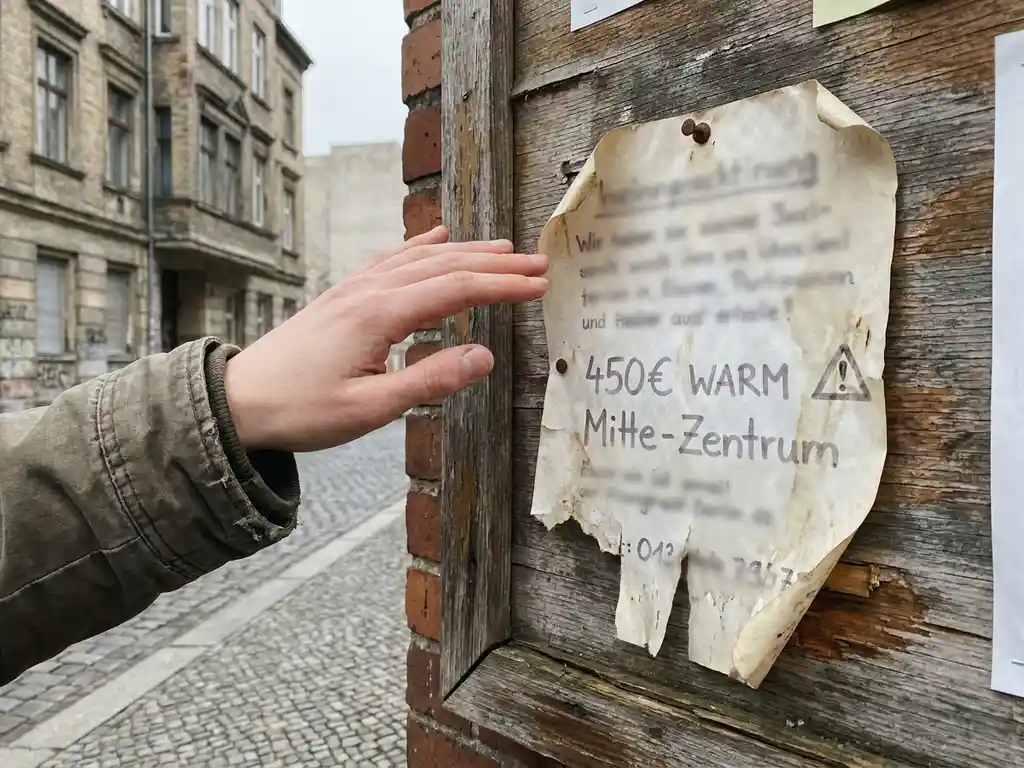
You can spot a housing scam targeting students in Berlin by watching for a small set of consistent warning signs: prices that seem too good for the location, landlords who refuse in-person viewings, and requests for payment before you have signed any contract or received any keys. International students are disproportionately targeted because scammers know they are searching remotely, under time pressure, and unfamiliar with German rental norms. The sections below break down each dimension of the problem so you can protect yourself at every stage of your search.
What are the most common red flags in Berlin rental listings?
The most common red flags in Berlin rental listings include unusually low rent for the district, vague or stolen photos, landlords who communicate only by email, and requests for a deposit or first month’s rent before any contract is signed. If a listing feels too convenient or too cheap, treat that feeling as data worth acting on.
Scammers rely on urgency and price to override your better judgment. A furnished one-bedroom in Mitte or Prenzlauer Berg listed at €500 per month in 2026 is not a bargain, it is almost certainly bait. Reverse-image searching the listing photos is one of the fastest checks you can run; fraudulent listings frequently reuse images stolen from legitimate property websites or real estate agencies.
- Suspiciously low rent relative to the Berlin district average
- No in-person viewing offered, with excuses such as the landlord being abroad
- Pressure to decide quickly, often framed as “many other applicants are interested”
- Requests for personal documents like passport copies before any viewing has taken place
- Payment demanded upfront via bank transfer, PayPal Friends, or cryptocurrency before a contract exists
- Poor grammar or generic language in the listing description that does not match a native speaker’s tone
One structural tell that many students miss: legitimate Berlin landlords almost always ask you to fill in a Selbstauskunft (tenant self-disclosure form) and provide proof of income or enrollment before discussing a deposit. If the process skips all of that and jumps straight to “send the deposit to secure the apartment,” walk away.
How do scammers typically target international students in Germany?
Scammers target international students in Germany by exploiting three specific vulnerabilities: geographic distance, time pressure, and unfamiliarity with local rental processes. The typical approach is to post a convincing fake listing on a well-known platform, respond quickly to inquiries, build a sense of trust over email or WhatsApp, and then request a deposit before the student has ever seen the property.
The profile of the target matters. Students arriving from South Asia, Africa, or other non-EU regions often begin their apartment search months before they land in Germany, which means they are conducting the entire process remotely. Scammers know this and craft their pitches accordingly. They may claim to be German landlords currently working abroad, or they may impersonate legitimate letting agencies by copying real branding and contact details.
A common escalation pattern works like this: the scammer responds warmly to your inquiry, shares additional photos, and offers a detailed description of the apartment. They then explain that they cannot meet in person but will send keys by courier once a holding deposit is received. After the transfer, contact stops entirely. By the time you arrive in Berlin, there is no apartment, no landlord, and no recourse through the platform where the listing appeared.
Students who have just received a university acceptance letter and are searching for student housing services under a deadline are particularly exposed. The combination of excitement, relief, and urgency makes it easier to skip the verification steps that would otherwise seem obvious.
Which Berlin rental platforms have the highest scam risk?
The highest scam risk on Berlin rental platforms is found on general classified ad sites and Facebook groups, where listings are unverified and anyone can post. Platforms like Facebook Marketplace, WG-Gesucht, and Craigslist carry meaningful fraud risk because they have no formal landlord verification process and limited moderation of individual listings.
This does not mean these platforms should be avoided entirely, WG-Gesucht in particular is widely used and legitimate listings do appear there. The risk is that the open nature of these platforms makes it easy for fraudulent listings to sit alongside real ones, and there is no visual difference between the two at first glance.
Dedicated real estate portals like ImmobilienScout24 and Immowelt carry lower but not zero risk. These platforms have more robust listing processes and are harder for anonymous scammers to use at scale, but fake listings do appear, particularly in the short-term rental category. University housing boards and official student union (AStA) resources tend to be safer because listings are submitted through an institutional channel with some level of accountability.
The safest approach is to treat the platform as a starting point rather than a guarantee, and to apply verification steps regardless of where you found the listing.
How can you verify a landlord or rental listing is legitimate?
You can verify a landlord or rental listing in Berlin is legitimate by requesting an in-person or video viewing, confirming the landlord’s identity against official documents, cross-checking the address against public property records, and never paying anything before a written contract is signed and a set of keys is physically in your possession.
Start with the viewing. A legitimate landlord will always agree to show you the apartment, either in person or via a live video call where they walk through the property in real time. A pre-recorded video or a gallery of photos is not a substitute. If someone refuses to do a live viewing for any reason, treat the listing as suspect.
- Ask the landlord to provide their full name and confirm it matches the name on the rental contract
- Request a copy of the Grundbuchauszug (land register extract) or any document proving ownership or authorized management of the property
- Search the address on Google Maps Street View to confirm the building exists and matches the photos
- Reverse-image search all listing photos using Google Images or TinEye
- Never transfer money outside of a signed rental agreement. In Germany, a verbal agreement has no practical enforceability in a scam scenario
- If using a letting agent, check that they are registered with the German property association (IVD)
For international students navigating this process from abroad, working with a verified housing intermediary that offers end-to-end rental support significantly reduces the risk of encountering fraudulent listings in the first place, because listings are pre-screened before they reach you.
What should you do if you’ve already sent money to a scammer?
If you have already sent money to a housing scammer in Germany, act immediately: contact your bank to attempt a payment reversal, file a criminal complaint (Strafanzeige) with the Berlin police, and report the listing to the platform where you found it. Speed matters because bank transfers can sometimes be recalled within a narrow window if the receiving account has not yet been emptied.
Reporting to the police
File a Strafanzeige at any Berlin police station or online through the Berlin Police online reporting portal. You will need to provide all communication records, screenshots of the listing, proof of payment, and any names or contact details the scammer used. While recovering the money through this route is difficult, the report creates an official record and may contribute to a broader investigation if the scammer is targeting multiple students.
Contacting your bank
Call your bank’s fraud line as soon as possible and explain that you have been the victim of a rental scam. If the transfer was made to a German bank account, your bank can contact the receiving institution and request a recall. This is more likely to succeed if the account has not yet been closed or drained. If you paid via PayPal, open a dispute immediately through the resolution center, noting that the transaction was made under false pretenses.
You should also report the incident to the Verbraucherzentrale (German Consumer Advice Centre), which tracks fraud patterns and can provide guidance on further steps. If the scammer impersonated a legitimate business, that company should also be notified so they can warn other students.
Being scammed is not a reflection of your intelligence, these operations are professionally constructed to deceive people under pressure. The most important thing is to act quickly, document everything, and use official channels rather than attempting to recover the money by re-engaging with the scammer.
How PropTech 24×7 GmbH helps students avoid housing scams in Berlin
PropTech 24×7 GmbH was founded specifically to address the gap that leaves international students vulnerable to exactly the risks described in this article. Every listing on the platform is verified before it reaches a student, and the entire process is designed to remove the conditions that scammers exploit: remote searching, time pressure, and lack of local knowledge.
Here is what working with PropTech 24×7 GmbH looks like in practice:
- Verified listings only – no unscreened private ads, no anonymous landlords
- 24 to 48 hour response guarantee – fast enough that you do not need to take risks out of desperation
- Bureaucracy support included – Anmeldung, utility setup, and WiFi so you are not navigating German admin alone
- Transparent, student-friendly contracts with no hidden fees and affordable entry points from €400 per month
- Scam prevention as a standard – the team actively educates students on fraud patterns before and during their search
If you are planning your move to Berlin and want to search for housing without the risk of fraud, get in touch with the team to start your search with verified listings and full support from day one. You can also explore the full range of student support services available to help you settle in safely and confidently.