
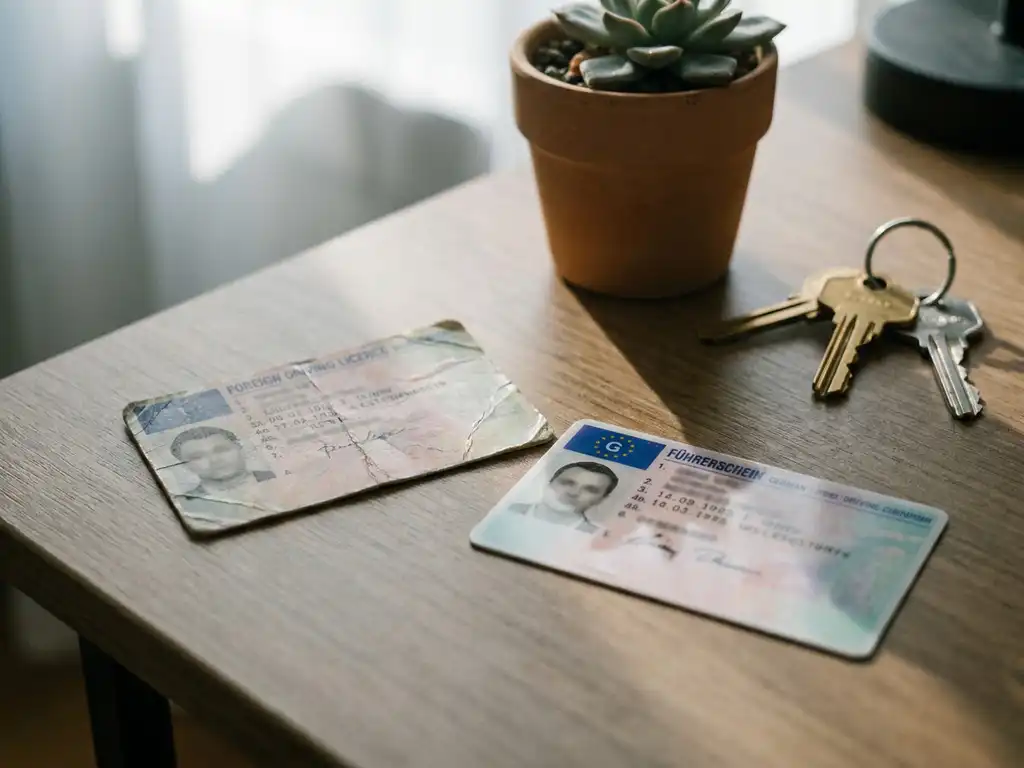
To transfer a foreign driving licence to a German one, you submit your original licence along with supporting documents to your local driving licence authority (Führerscheinstelle), pay the applicable fee, and receive a German Führerschein in return. Whether you also need to pass a theory or practical test depends entirely on which country issued your licence. International students and newcomers in Germany frequently need to navigate this process, and the steps below cover everything from eligibility to timelines.
Which countries can exchange their driving licence without a test in Germany?
Drivers from EU and EEA countries can exchange their licence for a German one without sitting any test whatsoever. Beyond Europe, Germany also grants full test-free exchanges to licence holders from a defined list of non-EU countries, including the United Kingdom, Switzerland, Japan, South Korea, Singapore, Australia, New Zealand, Canada, and several others. The exact list is maintained by the Federal Motor Transport Authority (Kraftfahrt-Bundesamt) and is reviewed periodically.
If your country is not on the recognised list, you will typically need to pass at least a theory test, and in many cases a practical driving test as well. This is a common situation for students arriving from South Asia, Africa, and other non-EU regions. It is worth checking the current list before you begin, because some countries have bilateral agreements that grant partial recognition, meaning you may be exempt from the practical test even if a theory test is still required.
What documents do you need to transfer a foreign driving licence?
To convert a foreign driving licence in Germany, you generally need to bring the following documents to your local Führerscheinstelle:
- Your valid original foreign driving licence (and a certified German translation if it is not in the Latin script)
- A valid passport or national identity card
- Your Anmeldung (official registration certificate confirming your Berlin or German address)
- A recent biometric passport photograph
- A completed application form (available at the Führerscheinstelle or often downloadable from the district website)
- Proof of payment for the processing fee
- An eye test certificate from an optician or doctor (a standard requirement in Germany)
If your licence is from a country that requires translation, only a certified translator or an officially recognised translation service is acceptable. Unofficial translations will not be accepted. Some districts in Berlin may request additional documents, so it is always worth calling your specific Führerscheinstelle in advance to confirm their exact requirements. Getting your Anmeldung completed is a prerequisite, so make sure your address registration is in order before you book an appointment.
How long does the German driving licence conversion process take?
The processing time for a driving licence exchange in Germany typically ranges from four to twelve weeks after you submit your complete application. The exact timeline depends on your district authority’s current workload, whether your documents need to be verified with your home country, and whether any translation or additional checks are required.
In Berlin specifically, waiting times at the Führerscheinstelle can be longer than in smaller cities due to high demand. Booking an appointment as early as possible is strongly recommended. Once your application is accepted and your original licence is surrendered, you may receive a temporary driving permit (vorläufiger Führerschein) that allows you to drive legally while the permanent card is being produced.
Do you need to take a theory or practical test to get a German licence?
Whether you need to take a test depends on your country of origin. EU and EEA licence holders need no tests at all. Holders from recognised non-EU countries (such as the UK, Australia, or Japan) are also generally exempt from both tests. Drivers from countries not on Germany’s recognition list must pass a theory test and, in most cases, a practical driving test too.
Theory test requirements
The theory test (theoretische Prüfung) is conducted in German, though some testing centres offer it in English and other languages. It covers German traffic rules, road signs, and hazard perception. You can prepare using official study apps and materials from the TÜV or DEKRA, which are the main examination bodies in Germany.
Practical test requirements
The practical driving test (praktische Prüfung) must be taken with a licensed German driving school (Fahrschule). Even if you are an experienced driver, you are required to take a minimum number of mandatory driving lessons before you are eligible to sit the test. This includes lessons on motorways (Autobahn), night driving, and rural roads. The cost of these lessons adds significantly to the overall expense of converting your licence.
Can you drive in Germany while your licence conversion is pending?
Yes, in most cases you can drive legally in Germany while your licence conversion is being processed, but the rules differ based on your situation. If you hold an EU or EEA licence, it remains valid in Germany without any time restriction while you live here, so there is no urgency to convert it immediately for legal driving purposes. For non-EU licence holders, the rules are stricter.
Non-EU licence holders can generally use their foreign licence in Germany for up to six months after registering their address (Anmeldung). After that period, the foreign licence is no longer legally valid for driving in Germany. If you have submitted your conversion application before the six-month window closes, your local authority may issue a temporary German driving permit to bridge the gap. Driving without a valid licence or permit after this period has serious legal consequences, so timing your application carefully matters.
How much does it cost to convert a foreign driving licence in Germany?
The administrative fee for a straightforward driving licence exchange in Germany is typically between €35 and €50, depending on the district. However, the total cost of converting a foreign driving licence can be significantly higher if you need to take tests or complete mandatory driving lessons.
- Administrative fee: approximately €35 to €50
- Certified translation: €30 to €80, depending on the language and provider
- Eye test: usually €5 to €20 at an optician
- Theory test fee (if required): approximately €22 to €30
- Practical test fee (if required): approximately €90 to €120
- Mandatory driving lessons (if required): several hundred euros, depending on the number of lessons needed
For students from non-recognised countries who need both tests and mandatory lessons, the total cost can reach €1,000 or more. Budgeting for this early is important, especially for international students managing tight finances in Berlin.
How PropTech 24×7 GmbH helps with settling in as an international student in Germany
Navigating German bureaucracy as a newcomer involves far more than just housing. PropTech 24×7 GmbH supports international students through the full range of practical challenges that come with relocating to Berlin, including the administrative steps that are often the most confusing.
- Anmeldung support: helping you complete your official address registration, which is a prerequisite for your driving licence application
- Bureaucracy guidance: step-by-step assistance with German administrative processes so you do not miss deadlines or submit incorrect documents
- Verified housing: access to scam-free, affordable accommodation starting from €400/month, ensuring you have a registered address to begin all official processes
- 24 to 48-hour response times: fast support when you have urgent questions about your move or legal obligations
- University and service provider network: connections to trusted partners across Berlin who can assist with translations, appointments, and local services
Whether you are just arriving in Berlin or already working through your paperwork, PropTech 24×7 GmbH is here to make the process less overwhelming. Get in touch with our team to find out how we can support your transition from day one.