
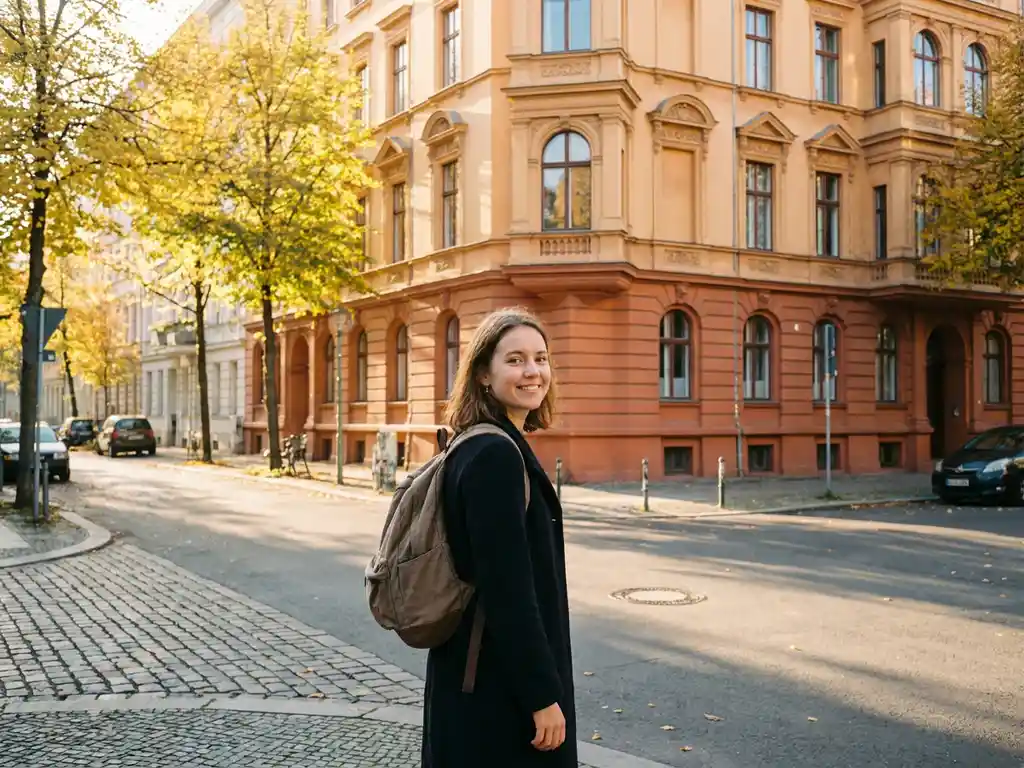
The best neighborhoods in Berlin for students are Mitte, Prenzlauer Berg, Friedrichshain, Neukölln, Kreuzberg, and Charlottenburg. Each district offers a different balance of affordability, transport access, and social life, making the right choice highly dependent on your university location, budget, and lifestyle preferences. The sections below break down each key factor to help you find your ideal base in the city.
Which Berlin neighborhoods are most affordable for students?
The most affordable Berlin districts for students in 2026 are Neukölln, Lichtenberg, Marzahn-Hellersdorf, and parts of Wedding. In these areas, shared apartment rooms can still be found starting from around €400 to €550 per month, significantly below the city average. These student-friendly areas in Berlin offer genuine value without requiring a long daily commute to most major campuses.
Neukölln is particularly popular among budget-conscious students. It sits close to Humboldt University’s southern campuses and Freie Universität, and its diverse, multicultural character makes international newcomers feel at home quickly. Wedding, in the north of Berlin, is another district that has maintained relatively low rents while benefiting from improving transport links and a growing creative community.
Lichtenberg and Marzahn-Hellersdorf are further east and tend to attract students who prioritize space over central location. Rents here are among the lowest in the city, and while the social scene is quieter, the areas are well connected by the S-Bahn and U-Bahn networks. Students willing to commute 20 to 30 minutes can access significant savings on monthly rent.
It is worth noting that Berlin’s rental market has tightened considerably in recent years. Even in traditionally affordable districts, competition for rooms is high, and acting quickly on listings is essential. Exploring student housing services that offer verified listings can help you avoid wasted time on scam postings or already-filled rooms.
Which neighborhoods have the best transport links to Berlin universities?
Mitte, Friedrichshain, and Prenzlauer Berg offer the best public transport connections to Berlin’s main universities. These central and near-central districts sit on multiple U-Bahn and S-Bahn lines, putting Humboldt University, Charité, Berlin School of Economics and Law, and other institutions within 10 to 20 minutes by public transit.
Humboldt University’s main campus is located directly in Mitte, making the surrounding districts of Prenzlauer Berg and Friedrichshain natural choices for students enrolled there. Both are served by the U2 and U5 lines, with frequent connections throughout the day and night.
Students attending Freie Universität Berlin, located in Dahlem in the southwest, are better served by living in Steglitz, Schöneberg, or Charlottenburg. The U3 line runs directly to the university, and these western districts are well equipped with student infrastructure including libraries, cafés, and affordable supermarkets.
Tempelhof-Schöneberg and Kreuzberg also deserve mention for their central positioning. Both districts are served by multiple lines and offer relatively quick access to several university campuses. For students who have not yet confirmed their exact campus location, these mid-city areas offer the most flexibility.
What is the social and cultural scene like in student-heavy Berlin districts?
Berlin’s student districts offer some of the most vibrant social and cultural scenes of any European city. Friedrichshain and Kreuzberg are the epicenter of Berlin’s nightlife and arts culture, while Prenzlauer Berg provides a more relaxed atmosphere with independent cafés, bookshops, and weekend markets. Each district has a distinct character that attracts different types of students.
Friedrichshain and Kreuzberg
These two neighboring districts share a border along the Spree River and together form one of the most culturally active zones in Berlin. Street art, music venues, international restaurants, and open-air markets define the area. Students who value a lively social environment and easy access to events and nightlife tend to gravitate here. The area is also home to a large international community, which makes it particularly welcoming for students arriving from outside Germany.
Prenzlauer Berg and Mitte
Prenzlauer Berg has evolved into a neighborhood favored by students who want cultural engagement without the intensity of Kreuzberg’s nightlife. Farmers’ markets, independent cinemas, and a strong café culture make it a comfortable place to study and socialize. Mitte, while more expensive, places students at the heart of Berlin’s museums, galleries, and historic landmarks, offering a rich cultural backdrop to university life.
How safe are Berlin’s student neighborhoods for international newcomers?
Berlin is generally a safe city for international students, and most student-heavy districts, including Mitte, Prenzlauer Berg, Friedrichshain, and Charlottenburg, have low rates of serious crime. That said, newcomers should be aware of housing scams, pickpocketing in busy tourist areas, and the importance of using verified housing platforms when searching for accommodation.
Housing fraud is one of the most significant risks facing international students arriving in Berlin. Fake listings on general rental platforms are common, often targeting students who are searching remotely before arriving in Germany. Landlords may request deposits for properties that do not exist or are not available for rent. Using platforms that verify listings before publishing them significantly reduces this risk.
In terms of physical safety, Wedding and Neukölln have historically carried reputations that put some newcomers off, but both districts are home to large student and international communities and are considered safe for everyday life. As with any large city, basic awareness of your surroundings, particularly late at night, is advisable. Berlin’s public transport network runs 24 hours on weekends, which means students rarely need to walk long distances alone at night.
For students who want guidance on navigating Berlin safely from day one, the PropTech 24×7 homepage outlines the full range of support services available to international newcomers.
Should students live in shared apartments or student dormitories in Berlin?
Most students in Berlin are better served by shared apartments (known as WGs, or Wohngemeinschaften) than by student dormitories. Dormitories are cheaper and administratively simpler, but waiting lists in Berlin can stretch to one or two years, making them an unreliable option for students who need housing quickly. Shared apartments offer more immediate availability, greater flexibility, and a wider range of locations across the city.
The case for student dormitories
Dormitories managed by the Studierendenwerk Berlin are subsidized and typically cost between €250 and €450 per month, making them the most affordable option in the city. They are also straightforward to manage, with utilities and internet often included. For students who apply well in advance and are willing to accept a longer wait, a dormitory place can be an excellent foundation for the first year of study. Social integration is also easier in dormitories, as residents naturally form a community.
The case for shared apartments
WG living is the dominant housing model among students in Berlin, and for good reason. Shared apartments are available across all districts, can be found within days rather than months, and allow students to choose their location based on university proximity, lifestyle, or budget. Contracts tend to be flexible, and living with other students or young professionals accelerates language learning and social integration. For international students arriving in Berlin for the first time, a verified WG listing in a well-connected district is usually the most practical starting point.
The right choice ultimately depends on your timeline and priorities. If you are applying to a Berlin university more than a year in advance, submitting a dormitory application immediately is worth doing alongside your WG search. If you need housing within weeks of arrival, a shared apartment is almost certainly your most realistic option.
How PropTech 24×7 GmbH helps students find housing in Berlin
PropTech 24×7 GmbH was founded specifically to solve the challenges that international students face when relocating to Berlin. The company goes beyond listing properties, offering end-to-end support that covers every stage of the housing and integration process. Whether you are searching for an affordable room in Neukölln or a well-connected flat near a central campus, the team is available around the clock to guide you.
- Verified listings only: Every property is checked before it reaches students, eliminating the risk of scams and fake listings that are common on general rental platforms.
- Affordable entry points: Rooms start from €400 per month with student-friendly contracts and no hidden fees.
- Fast response and move-in timelines: A 24 to 48 hour response guarantee means you are never left waiting when time is critical.
- Bureaucracy support included: Anmeldung (address registration), utility setup, and WiFi connection are handled as part of the service.
- Coverage across Berlin: Listings span more than nine Berlin districts, giving students genuine choice over where to live.
If you are ready to find safe, affordable housing in the right Berlin neighborhood for your needs, get in touch with the team today and receive personalized support within 24 hours.