
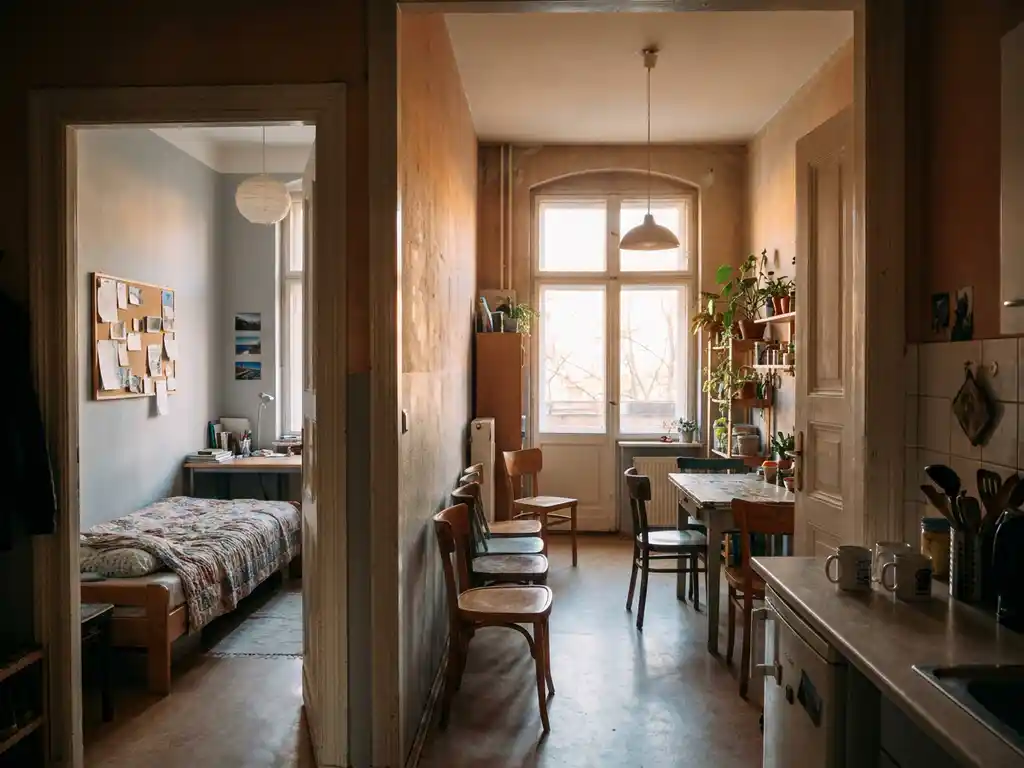
A student dorm in Berlin (Studentenwohnheim) provides a furnished, all-inclusive room managed by a student housing organisation, while a WG in Berlin (Wohngemeinschaft, or shared flat) is a privately rented apartment where two or more tenants split the rent and live together. The core difference is structure: dorms are institutionally managed with fixed rules, while WGs are informal arrangements between housemates. Both are popular forms of student accommodation in Berlin, but they suit very different personalities, budgets, and timelines.
Choosing between the two shapes your daily life, your social circle, and your monthly expenses from day one. The questions below break down every dimension of that choice so you can make the right call for your situation.
Which is cheaper: a student dorm or a WG in Berlin?
Student dorms in Berlin are generally cheaper in terms of total monthly cost, with rooms typically ranging from around €250 to €400 per month, including utilities. WG rooms in Berlin tend to cost between €400 and €700 per month depending on the district, room size, and what bills are included. However, the true cost comparison depends on what each option covers.
Dorm fees almost always bundle internet, heating, water, and sometimes access to a shared kitchen or laundry into one flat rate. That predictability is a significant financial advantage for students on tight budgets. The catch is availability: Berlin’s public student housing provider, the Studierendenwerk Berlin, has long waiting lists, and securing a dorm place before you arrive is far from guaranteed.
WG costs are more variable. Rent in central districts like Mitte or Prenzlauer Berg runs higher than in Lichtenberg or Reinickendorf. Some WGs advertise a warm rent (Warmmiete) that includes utilities, while others list a cold rent (Kaltmiete) to which you add your share of heating, electricity, and internet. Always clarify this before signing anything.
- Dorm average: €250 to €400 per month, all-inclusive
- WG average: €400 to €700 per month, bills sometimes separate
- Deposit: WGs typically require two to three months’ deposit; dorms usually require one
What does living in a Berlin WG actually involve?
Living in a shared flat in Berlin means renting a private room within a larger apartment and sharing common spaces such as the kitchen, bathroom, and living room with one to four other people. Housemates are usually found through platforms like WG-Gesucht, and the arrangement is governed by a sublease or a direct tenancy contract with the landlord.
Day-to-day WG life in Berlin is largely self-managed. Housemates typically divide household chores, split utility bills, and set their own house rules. The social dynamic varies enormously: some WGs are close-knit communities where flatmates cook together and socialise regularly, while others are more independent, with each person keeping largely to themselves.
From a legal and administrative perspective, a WG comes with responsibilities that a dorm does not. You will need to register your address at the local Bürgeramt (Anmeldung), set up or transfer utilities, and potentially deal with a German-language lease. International students unfamiliar with German bureaucracy often find this process stressful without guidance. Services that support student integration in Berlin can make this transition significantly smoother.
How do student dorms in Berlin work?
A Studentenwohnheim in Berlin is a purpose-built or converted residential building reserved exclusively for enrolled students. The Studierendenwerk Berlin manages the largest network of public dorms across the city, but private providers and university-affiliated housing also exist. Rooms range from single furnished rooms with shared bathrooms to small studio apartments within a larger complex.
To apply for a public dorm place, you register on the Studierendenwerk waiting list and provide proof of enrolment. Waiting times can stretch from several months to over a year, which means many students arrive in Berlin before a dorm place becomes available. Private dorm providers tend to have faster turnaround but charge higher rents, often sitting closer to the lower end of the WG price range.
Rules in dorms are more structured than in a WG. Quiet hours, guest policies, and kitchen-use schedules are typically set by building management rather than negotiated between flatmates. Contracts are usually tied to your enrolment status, meaning you must vacate if you leave your university programme. On the upside, maintenance issues are handled by the provider, and the administrative burden on the student is minimal.
Who is better suited to a dorm versus a WG in Berlin?
Student dorms in Berlin suit students who prioritise affordability, simplicity, and a ready-made social environment, particularly those arriving for the first time and wanting a low-stress start. WGs in Berlin are better suited to students who value independence, want more control over their living situation, and are comfortable navigating the German rental market.
Choose a dorm if you:
- Are arriving in Berlin for the first time and want a managed, straightforward setup
- Have a tight monthly budget and need all-inclusive pricing
- Want to meet other students quickly through a built-in community
- Prefer not to deal with utility contracts or lease negotiations
Choose a WG if you:
- Want more personal space and a private room in a residential neighbourhood
- Are staying longer term and want a stable, flexible living arrangement
- Prefer to choose your own housemates and set your own house culture
- Cannot wait for a dorm place and need housing quickly upon arrival
Working professionals and postgraduate students often gravitate toward WGs because they offer more autonomy and are not tied to enrolment status. Undergraduate students arriving for a one- or two-year programme frequently prefer dorms for the community aspect and reduced administrative load.
What are the biggest risks when searching for a WG in Berlin?
The biggest risk when searching for a WG in Berlin is rental fraud. Berlin’s housing market is highly competitive, and scammers specifically target international students who are searching remotely and under time pressure. Fake listings, requests for deposits before a viewing, and landlords claiming to be abroad are all common warning signs.
Beyond scams, there are several other real risks to be aware of:
- Unlicensed subletting: Some WG rooms are sublet without the landlord’s knowledge or consent, which can result in the tenant being asked to leave without legal recourse
- Verbal-only agreements: Moving in without a written contract leaves you unprotected if disputes arise over deposits or notice periods
- Overcrowded platforms: Popular listings on WG-Gesucht receive hundreds of applications within hours, making it genuinely difficult to secure a room without a strong German-language profile or local contacts
- Hidden costs: Some listings advertise a low cold rent but add high utility costs, internet fees, or Nebenkosten (service charges) that significantly raise the actual monthly outgoing
To reduce these risks, always insist on a physical viewing before paying any deposit, request a written tenancy agreement, and use platforms that verify listings. If you are searching from abroad, working with a trusted intermediary who can verify listings on your behalf is one of the most effective protective steps you can take. You can explore verified student housing options to see what a properly vetted listing looks like.
Where can international students find verified WGs and dorms in Berlin?
International students can find verified WGs and dorms in Berlin through a combination of official platforms, university housing offices, and specialist student housing services. The most reliable starting points are the Studierendenwerk Berlin website for public dorms, WG-Gesucht for shared flats, and university international offices, which often maintain their own housing boards or partnerships with local landlords.
For students who need housing quickly or are searching from outside Germany, these mainstream platforms can be difficult to navigate alone. Listings move fast, many require a German-language application, and distinguishing legitimate offers from scams takes local knowledge. Specialist services that focus on student housing in Berlin can bridge this gap by providing pre-vetted listings, guided applications, and support with the administrative steps that follow securing a room.
Key places to search for student accommodation in Berlin in 2026 include:
- Studierendenwerk Berlin (studierendenwerk-berlin.de) for public dorm applications
- WG-Gesucht.de for private shared flat listings across all Berlin districts
- Your university’s international office, which may have emergency housing contacts or partnership landlords
- Immobilienscout24 and Kleinanzeigen for private room rentals, though these require more careful vetting
- Specialist student housing services that offer verified listings and guided support for international arrivals
How PropTech 24×7 GmbH helps with student housing in Berlin
PropTech 24×7 GmbH is a Berlin-based student housing and integration service built specifically for international students navigating the German rental market. Founded by someone who went through the same challenges as a newcomer, the company provides end-to-end support from finding a verified room to settling into life in Berlin.
Here is what PropTech 24×7 GmbH offers students looking for a dorm or WG in Berlin:
- Verified listings only: Every property is checked before it reaches students, eliminating the risk of scam listings and unlicensed sublets
- 24 to 48-hour response guarantee: Fast turnaround on housing enquiries, with rapid move-in timelines suited to students arriving under time pressure
- Bureaucracy support included: Help with Anmeldung (address registration), utility setup, and WiFi connection so you can focus on starting your studies
- Affordable entry points: Rooms available from €400 per month with student-friendly, flexible contracts and no hidden fees
- 128+ university and landlord partnerships: Access to housing across more than nine Berlin districts, including options not listed on public platforms
Whether you are still deciding between a dorm and a WG or you have already made your choice and need a verified room fast, PropTech 24×7 GmbH can guide you through every step. Get in touch with the team to find your room in Berlin and start your student life the right way.