
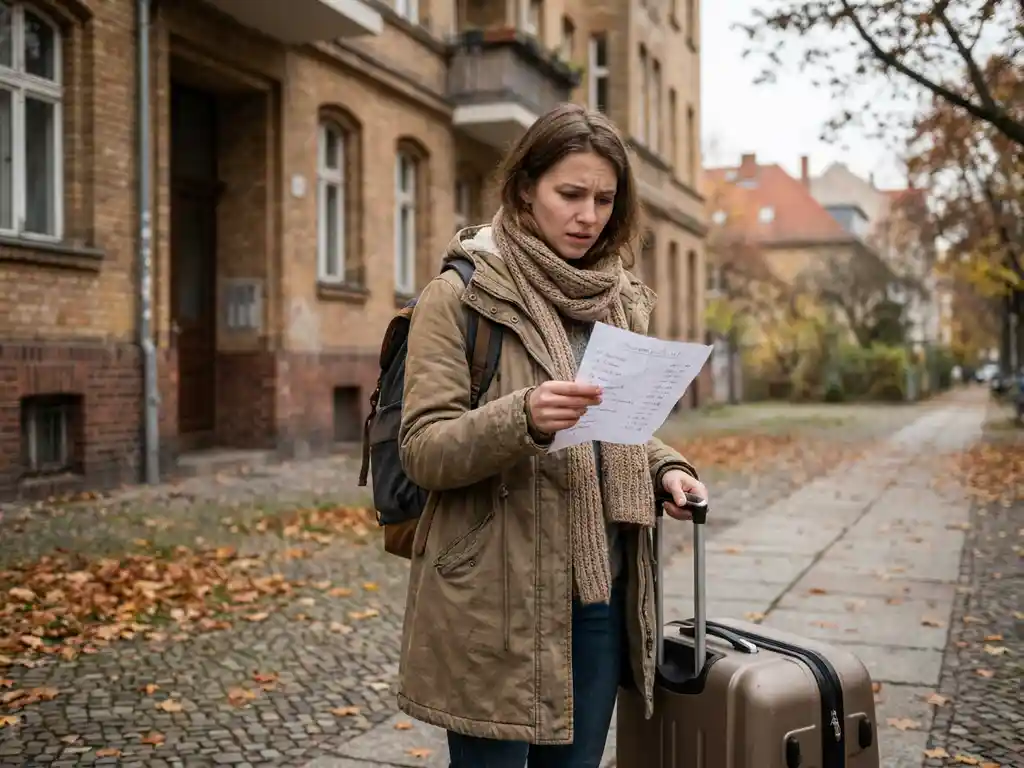
International students struggle to find housing in Germany primarily because of a combination of structural market pressures, landlord risk aversion toward foreign applicants, and a documentation system that most newcomers are simply not prepared for. The German rental market is one of the most competitive in Europe, and international students face specific barriers that domestic applicants do not. The sections below break down each of these challenges and offer practical guidance on how to navigate them.
What makes the German rental market so difficult to navigate?
The German rental market is difficult to navigate because demand for affordable housing in major cities far exceeds supply, and the application process is heavily bureaucratic, favoring applicants with an established German financial and administrative history. For international students arriving without that history, the odds are structurally stacked against them from the start.
Cities like Berlin, Munich, Hamburg, and Frankfurt have seen sustained pressure on housing stock for years. Student accommodation Germany-wide has not kept pace with the rapid growth in international enrollment, which means that even well-prepared applicants face intense competition for every available unit. A single affordable listing in Berlin can attract dozens of applications within hours of going live.
Beyond supply and demand, the rental process itself is opaque to outsiders. Landlords and property management companies typically conduct viewings in German, expect applications to be submitted within tight windows, and use informal evaluation criteria that favor applicants who already understand local norms. For someone arriving from outside the EU, the entire process can feel like a system designed to exclude them, even when that is not the intent.
Why do landlords in Germany reject international student applications?
Landlords in Germany most commonly reject international student applications due to concerns about income verification, credit history, and perceived tenancy risk. German landlords rely heavily on the SCHUFA credit report as a screening tool, and international students arriving from outside Germany have no SCHUFA record at all, which many landlords treat as a disqualifying factor.
Beyond credit checks, landlords typically require proof of income that covers at least two to three times the monthly rent. Most international students cannot meet this threshold through employment income alone, and blocked accounts or parental support are not always accepted as equivalent evidence. The absence of a German guarantor compounds the problem further, as many landlords see a guarantor as the primary fallback if rent payments fail.
There is also a language barrier that affects perception. Applications submitted in English, or viewings conducted through translation, can create an impression of administrative difficulty for the landlord, even when the student is fully capable and financially sound. The result is that qualified international students are regularly passed over in favor of domestic applicants who present a more familiar profile on paper.
What documents do international students need to rent in Germany?
International students renting an apartment in Germany typically need a valid passport or visa, proof of enrollment at a German university, proof of financial means such as a blocked account statement or scholarship letter, a completed rental application form, and a self-disclosure form known as a Selbstauskunft. Some landlords also request a SCHUFA report, though this is impossible to provide for first-time arrivals.
Preparing these documents in advance, and ideally in both English and German, significantly improves an applicant’s credibility. A blocked account showing the required minimum balance required by German immigration authorities serves as the most commonly accepted proof of financial stability for students without employment income.
Additional documents that strengthen an application include a personal cover letter written in German, references from a previous landlord if available, and a bank statement from a home country account. Some students also provide a parental guarantee letter, though this is not a standardized requirement and its acceptance varies by landlord. Understanding what documents to prepare before arriving in Germany is one of the most practical steps any international student can take toward securing student accommodation.
How widespread are housing scams targeting students in Germany?
Housing scams targeting international students in Germany are extremely widespread. Students searching for accommodation from abroad are particularly vulnerable because they cannot physically visit properties before committing, and scammers exploit this urgency. Common tactics include fake listings with stolen photos, requests for advance deposits before a contract is signed, and landlords who claim to be abroad and ask for payment via wire transfer.
The pattern typically follows a recognizable structure: a listing appears at a below-market price, the supposed landlord responds quickly and warmly, and pressure builds to secure the property with a payment before a viewing can be arranged. Once the money is transferred, the landlord disappears and the listing vanishes.
Students searching for housing in Berlin and other major German cities should treat any listing that requests payment before a signed contract as a scam. Legitimate landlords in Germany do not ask for deposits before a formal rental agreement is in place. Using verified platforms, working with established housing services, and never transferring money to a private individual without meeting them in person or confirming identity through official channels are the most reliable protections against fraud.
What are the alternatives when student dorms are full?
When student dorms are full, the main alternatives for international students in Germany are private shared apartments known as WGs (Wohngemeinschaften), purpose-built student housing operated by private providers, short-term sublets, and temporary accommodation in hostels or serviced apartments while a longer-term solution is arranged. Each option involves different trade-offs in cost, flexibility, and availability.
WG shared apartments
Living in a WG is the most common alternative to student dorms in Germany. Shared apartments are widely available in most university cities, and costs are split between housemates, making them one of the more affordable options for students on tight budgets. The challenge is that WG rooms are also highly competitive, and many existing housemates conduct informal interviews before accepting a new tenant. Platforms like WG-Gesucht are the primary marketplace for these listings.
Private student housing providers
Private student housing providers operate furnished apartments and residence-style buildings specifically designed for students. These typically offer flexible lease terms, all-inclusive pricing, and faster move-in timelines than the private rental market. They cost more than a standard WG room but offer significantly more certainty for students arriving from abroad without an established local network. Availability varies by city, and Berlin has a growing number of these providers serving the international student population.
How can international students improve their chances of securing housing?
International students can significantly improve their chances of securing housing in Germany by starting their search at least three to four months before arrival, preparing a complete and professionally presented application in German, demonstrating financial stability clearly, and targeting listings through multiple channels simultaneously. Timing and preparation are the two factors most within a student’s control in an otherwise competitive market.
A few practical steps make a measurable difference:
- Start early: The Berlin student housing market moves fast. Beginning the search before a visa is even confirmed gives applicants a meaningful lead over those who wait until arrival.
- Write a German cover letter: A short, personalized letter in German that introduces the applicant, explains their study program, and confirms their financial situation signals effort and reliability to landlords.
- Prepare a complete document package: Having every required document ready to send within hours of a listing going live is often what separates successful applicants from unsuccessful ones.
- Use multiple platforms: Relying on a single listing site reduces exposure. Searching across WG-Gesucht, ImmobilienScout24, student-specific services, and university housing boards widens the net.
- Consider temporary housing first: Arriving with short-term accommodation secured removes the pressure of finding a permanent place from abroad, and searching in person is consistently more effective than searching remotely.
- Build a local network: University Facebook groups, international student WhatsApp communities, and university housing offices are informal channels that surface listings before they reach public platforms.
Students who approach the German rental market as a structured process rather than a spontaneous search consistently achieve better outcomes. The barriers are real, but they are not insurmountable with the right preparation and support.
How PropTech 24×7 GmbH helps international students find housing in Germany
PropTech 24×7 GmbH was built specifically to solve the housing challenges described throughout this article. Founded in Berlin by someone who navigated these same barriers as an international newcomer, the company provides end-to-end support for students entering the German rental market, removing the most common points of failure at every stage of the process.
Here is what PropTech 24×7 GmbH offers students finding housing in Germany:
- Verified listings only: Every property in the portfolio has been checked to eliminate scam risk, so students searching from abroad can apply with confidence.
- 24 to 48 hour response guarantee: Fast turnaround means students are never left waiting during the most time-sensitive phase of their move.
- Bureaucracy support included: From Anmeldung registration to utilities and WiFi setup, the administrative steps that trip up most newcomers are handled as part of the service.
- Affordable entry points: Accommodation options start from €400 per month with flexible, student-friendly contracts that do not require a German guarantor or SCHUFA history.
- University and landlord network: With 128+ partnerships across universities, landlords, and service providers, PropTech 24×7 GmbH has access to housing that never reaches public listing platforms.
- Beyond housing: The service extends to career support, helping students build their future in Germany, not just find a first apartment.
If you are an international student preparing to move to Germany and want to avoid the pitfalls described in this article, get in touch with the team to find verified, affordable housing in Berlin with full support from day one.